Buying a commercial LED screen is not as simple as choosing a size and comparing prices. The display must suit the room, audience, content, structure, electrical supply and operating plan. A specification that looks impressive on paper can still produce a disappointing result—or create years of unnecessary service costs. The most expensive mistakes usually happen before the screen is ordered. Businesses focus on the panels while overlooking the complete system and the environment in which it will operate. If your organization is considering an LED video wall, avoid these ten common mistakes.
1. Choosing pixel pitch without considering viewing distance
Pixel pitch is the distance between neighbouring pixels, measured in millimetres. A smaller pixel pitch places the pixels closer together and can produce a more detailed image at short viewing distances. It also normally increases the price. That does not mean the smallest available pixel pitch is automatically the best option. A boardroom audience sitting close to the screen may benefit from a fine-pitch display. Viewers in a gymnasium, auditorium or large worship space will usually be farther away and may not see a meaningful improvement from the same premium specification. Before requesting a quote, measure the distance from the screen to the closest regular viewer. Also consider the type of content you will display. Detailed dashboards and small text require different treatment than large video, branding or event graphics. Learn more in our guide to
LED pixel pitch.
2. Comparing quotes by screen size alone
Two LED screens with identical dimensions can differ substantially in image quality, durability and total project scope. A useful quote should identify more than width and height. It should explain the proposed pixel pitch, cabinet design, LED technology, brightness, refresh rate, processor, mounting system, power requirements, installation, calibration, training, warranty and spare parts. Electrical assumptions should also reflect the code adopted in the project’s jurisdiction. As one current provincial reference, Alberta lists the
electrical codes and standards in force, including the applicable edition of the Canadian Electrical Code. One supplier may quote only the display hardware. Another may include the supporting structure, controller, cabling, installation and commissioning. Comparing only the totals can make the more complete proposal appear expensive when it is actually more realistic. Ask every supplier to separate the major components and clearly list exclusions. A lower initial price is not a saving if essential work appears later as a change order. For broader budgeting guidance, see
how much an LED wall costs in Canada.
3. Buying before completing a site assessment
The building has as much influence on the project as the display. A professional site assessment should review the mounting surface, structural conditions, available electrical service, cable routes, ventilation, ambient light, service access and equipment location. It should also identify access restrictions that could affect delivery and installation. Without this information, a business may order a screen that is too heavy for the intended wall, difficult to power, impossible to service from the rear or unsuitable for the available space. Early site planning also helps reveal work that may require coordination with electricians, structural professionals, general contractors or local authorities. Permit requirements vary by province and municipality; for example, Alberta’s Safety Codes Council advises checking with the local municipality before work begins and explains that permits commonly apply to new installations and alterations. Review its official
permit information for Alberta projects as an initial reference, then confirm the requirements for the project’s specific location. Finding those requirements before procurement is far less disruptive than discovering them during installation.
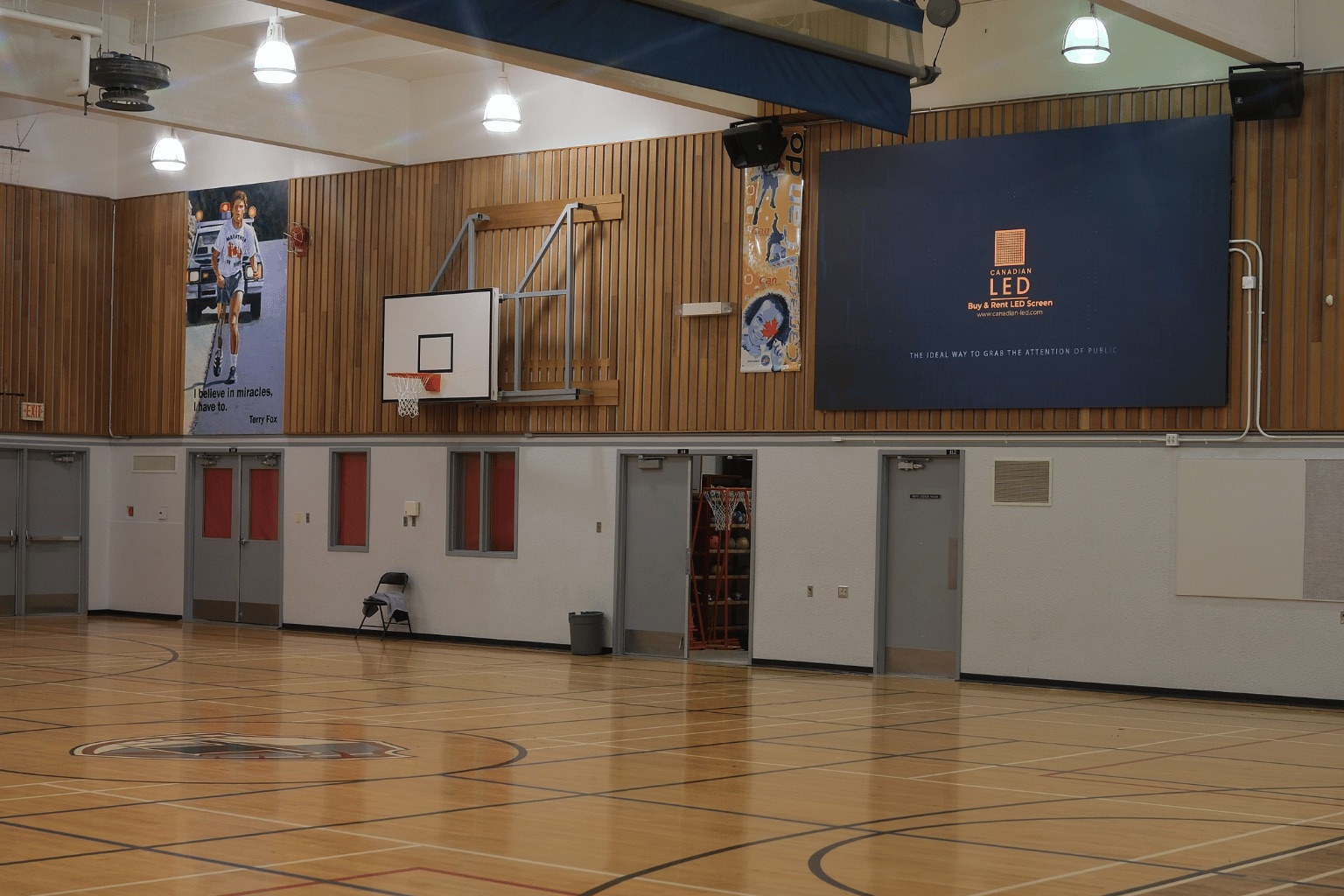 A completed Canadian LED installation in a Greater St. Albert Catholic school gymnasium. Room dimensions, ambient light, viewing distance and mounting conditions all influence the final display design.
4. Ignoring ambient light and the installation environment
Brightness must match the environment. An indoor display in a controlled auditorium has very different requirements from a screen facing large windows. An outdoor display must remain visible during the day while also operating appropriately after dark. More brightness is not always better. An excessively bright indoor screen can be uncomfortable and consume unnecessary power. A screen without enough brightness may look washed out when sunlight enters the space. For outdoor projects, buyers also need to consider weather exposure, temperature changes, water and dust protection, drainage, corrosion resistance and safe operating limits. Canadian winters make enclosure design, thermal management and access for maintenance especially important. The correct specification should be based on actual site conditions, not a generic indoor-or-outdoor label. Our
indoor versus outdoor LED screen guide explains the main differences.
5. Treating the LED panels as the entire system
The visible panels are only one part of an LED installation. A complete system may include:
- Mounting or structural components
- A video processor or controller
- Sending and receiving hardware
- Power and data distribution
- Signal extenders or fibre equipment
- A media player or content-management system
- Electrical protection
- Spare modules, power supplies and receiving cards
- Installation, configuration and calibration
- User training and technical documentation
If these items are not defined at the quotation stage, the project budget and responsibilities remain unclear. Ask who is supplying, installing and supporting every component between the content source and the screen. The processor is particularly important because it controls how content is scaled and delivered to the display. Read our technician’s explanation of
the role of a video processor. For a first-party technical example, NovaStar’s
full-screen calibration documentation shows why brightness and colour uniformity must be calibrated across cabinets and replacement modules rather than judged from a single panel specification.
6. Overlooking maintenance and service access
Every commercial display will eventually require inspection or component replacement. The question is whether that work will be quick and controlled or disruptive and expensive.
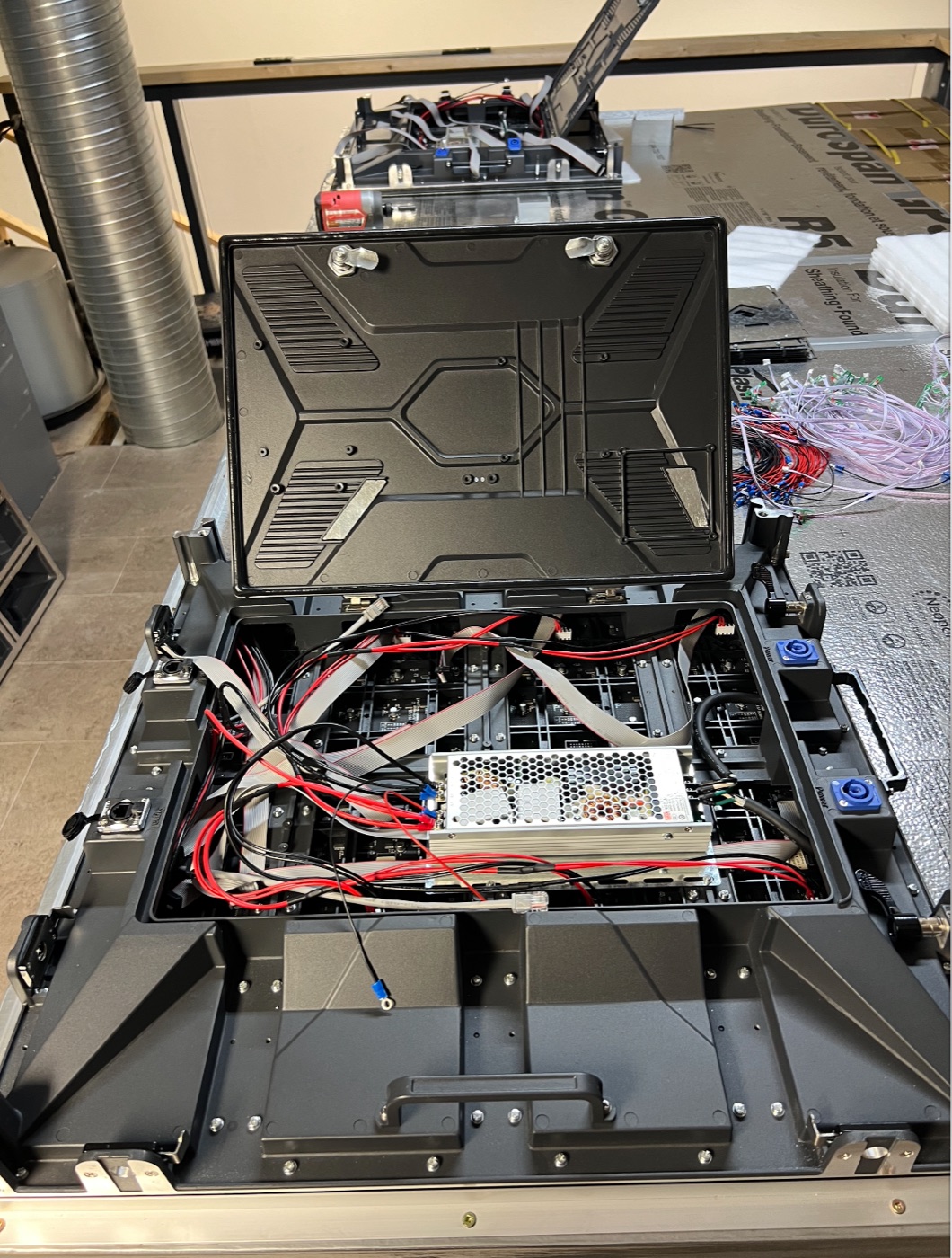 An opened LED cabinet from Canadian LED’s service library demonstrates why component access, cable organization and compatible replacement parts should be considered before purchase.
 Some installations are designed for front service, allowing technicians to remove modules from the viewing side. Others require access behind the wall. The right approach depends on the cabinet, mounting system and available space. Before buying, ask:
- Can modules, power supplies and receiving cards be replaced without dismantling the wall?
- Is safe access available after surrounding finishes are completed?
- Are critical spare parts included?
- Will replacement modules match the original production batch?
- Who provides service in your region?
- What response can you expect if the display is essential to daily operations?
A beautiful installation that cannot be serviced efficiently is not a successful design.
7. Focusing on the purchase price instead of total cost of ownership
The purchase price is important, but it is not the complete cost of an LED screen. Businesses should also account for design, shipping, structural work, electrical upgrades, installation, content hardware, training, energy consumption, routine maintenance and future repairs. Downtime can also carry a real cost when the display supports events, advertising, worship services, customer communication or operational information. A well-designed system may cost more initially while reducing service time and avoiding premature replacement. Conversely, an inexpensive imported package can become costly if documentation is incomplete, replacement parts are unavailable or local technicians cannot support it. Evaluate proposals over the expected ownership period rather than selecting the lowest purchase price. If importing is being considered, review our analysis of whether it is worth
importing an LED video wall from overseas.
8. Accepting a vague warranty and support plan
The word “warranty” is not enough. Buyers need to understand what the warranty covers, who performs the diagnosis, where replacement parts are stored and who pays for labour, travel and shipping. Ask the supplier to explain:
- Warranty length and start date
- Covered and excluded components
- On-site labour coverage
- Diagnostic and response process
- Availability of local technicians
- Expected replacement-part availability
- Conditions that could void coverage
- Support available after the warranty ends
Also verify that the company quoting the project will remain responsible after installation. A single accountable partner is usually easier to work with than separate vendors blaming the screen, processor, structure or electrical work.
9. Forgetting about content and day-to-day operation
Even a technically excellent LED wall will underperform if the content is the wrong shape, too small to read or rarely updated. Define the content workflow before finalizing the display. Decide who will create, approve, schedule and publish content. Identify the required sources, such as presentations, live cameras, digital signage, sports scoring, streaming devices or multiple windows. The physical dimensions and pixel resolution of the wall should support this content plan. An unusual aspect ratio can be visually striking, but it may require custom graphics and extra production work. Standard 16:9 content can leave unused space or become distorted if the screen is designed without considering the source material. Your team should receive practical training on starting the system, switching sources, loading content and responding to common issues.
10. Choosing a supplier without reviewing comparable work
Product specifications matter, but the supplier’s planning and installation experience can determine the success of the project. Ask for examples involving similar environments, screen sizes and use cases. A company experienced with temporary event walls may not automatically have the structural, electrical and service expertise required for a permanent architectural installation. The reverse can also be true. Look for evidence that the supplier can manage the full process: consultation, site assessment, design, engineering coordination, installation, calibration, training and ongoing support. Review completed work in the supplier’s
LED screen project gallery and ask what challenges were solved on projects most similar to yours.
Questions to ask before approving an LED screen purchase
Use this short checklist when reviewing a proposal:
- What is the closest viewing distance, and why is this pixel pitch appropriate?
- Is the brightness suitable for the actual ambient light?
- What equipment and services are included or excluded?
- Has the mounting surface and electrical capacity been assessed?
- How will technicians access and service the display?
- Which spare components are included?
- Who is responsible for installation, calibration and training?
- What does the warranty cover, including labour and travel?
- How will replacement parts be sourced in the future?
- Can the supplier show comparable completed installations?
Plan the complete LED project—not just the screen
The best LED display is not necessarily the largest, brightest or most expensive model. It is the system that fits the audience, space, content, infrastructure and long-term operating plan. Taking time to assess the site and compare complete proposals can prevent overspending, installation delays and avoidable downtime. It also gives your organization a clearer basis for evaluating suppliers and protecting its investment. Canadian LED helps organizations across Canada plan, supply and install commercial LED display systems.
Contact our team for a professional consultation and a project-specific quote before selecting your screen.Frequently Asked Questions
What should a business consider before buying an LED screen?
Consider viewing distance, pixel pitch, ambient light, screen size, structural support, electrical capacity, content requirements, maintenance access, warranty coverage and local technical support. The complete installed system matters more than the panels alone.
What is the biggest mistake when choosing an LED video wall?
One of the most common mistakes is selecting a screen from price or pixel pitch alone. The right specification depends on the audience, viewing distance, environment, content and installation conditions.
Should I choose the smallest available pixel pitch?
Not necessarily. A smaller pixel pitch can improve close-range detail, but it also increases cost. If viewers are farther away, the improvement may not be visible enough to justify the premium.
What should an LED screen quote include?
A complete quote should identify the display specifications, processor, mounting system, power and data equipment, installation, calibration, training, warranty, spare parts and exclusions. Structural and electrical work should also be clearly assigned.
Why is local support important for an LED screen?
Local support can shorten diagnostic and repair times, simplify access to compatible parts and provide accountability after installation. This is particularly important for screens used in daily business operations or scheduled events.