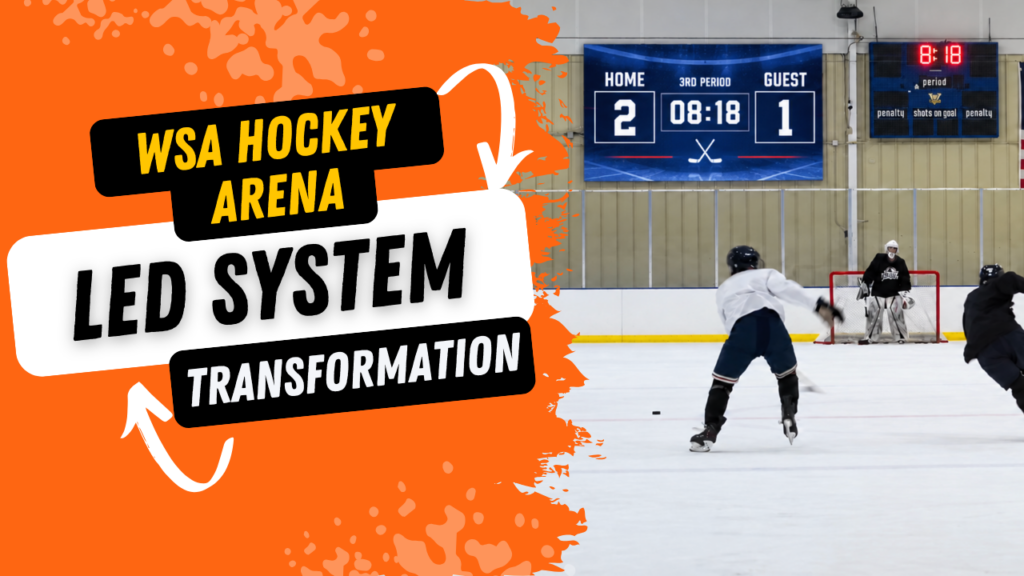
A scoreboard does not have to be limited to numbers. At Westchester Skating Academy in New York, Canadian LED installed a 15-by-8-foot hockey arena LED video wall that can keep score, show live game feeds and play promotional content—all on one display.
The new digital scoreboard is approximately twice the size of the arena’s previous system and was delivered at nearly the same price. More importantly, it gives the venue a flexible visual platform it can use throughout games, tournaments and other events.
Watch the LED video wall installation process on YouTube.
Project overview
- Venue: WSA Westchester Skating Academy, New York
- Display size: 15 feet wide by 8 feet high
- Pixel pitch: 2.5 mm
- LED modules: Canadian LED PRO arena modules
- Protection: Durable epoxy coating
- Primary uses: Scoring, live game feeds and promotional videos
- On-site completion: Three working days after the project resumed
The result is more than a replacement scoreboard. It is a multi-purpose arena LED display designed around the venue’s day-to-day needs.
Why replace a traditional hockey arena scoreboard with an LED video wall?
Traditional scoreboards perform one important job, but their fixed layouts leave little room for other content. A digital LED wall can combine scoring with live video, sponsor messages, event graphics, announcements and pre-produced promotions.
For Westchester Skating Academy, that flexibility made it possible to install a screen approximately twice the size of the previous scoreboard at nearly the same price. Instead of investing in another single-purpose system, the arena gained a display that can serve multiple roles.
During a game, the screen can show scores and a live camera feed. Between periods or during other events, the same display can run promotional videos, sponsor content or venue announcements. This gives the arena more ways to engage spectators and use valuable screen space.
A 2.5 mm pixel pitch for clear arena visuals
The 15-by-8-foot display uses a 2.5 mm pixel pitch. Pixel pitch is the distance between the centres of neighbouring LED pixels: a smaller measurement places the pixels closer together and supports greater image detail at shorter viewing distances.
Choosing pixel pitch is not simply a matter of selecting the smallest number. The correct specification depends on the screen dimensions, the distance to the closest viewers, the content and the project budget. The AVIXA display image size standard similarly relates display size and viewer position to the level of detail an audience needs to see. In this arena, the 2.5 mm configuration supports sharp scoring graphics, live video and promotional content on a large indoor display.
If you are comparing options for a sports facility, read our guide to LED pixel pitch before choosing a display.
PRO arena modules with a protective epoxy coating
Hockey and skating facilities create different operating conditions than offices or controlled presentation spaces. Arena equipment should be selected with the installation environment and long-term use in mind.
For this project, Canadian LED supplied PRO modules designed for hockey and ice-arena applications. Each module includes a protective epoxy coating for added durability. That protection supports the practical requirements of a permanent arena display while preserving the bright, consistent image expected from an indoor LED wall.
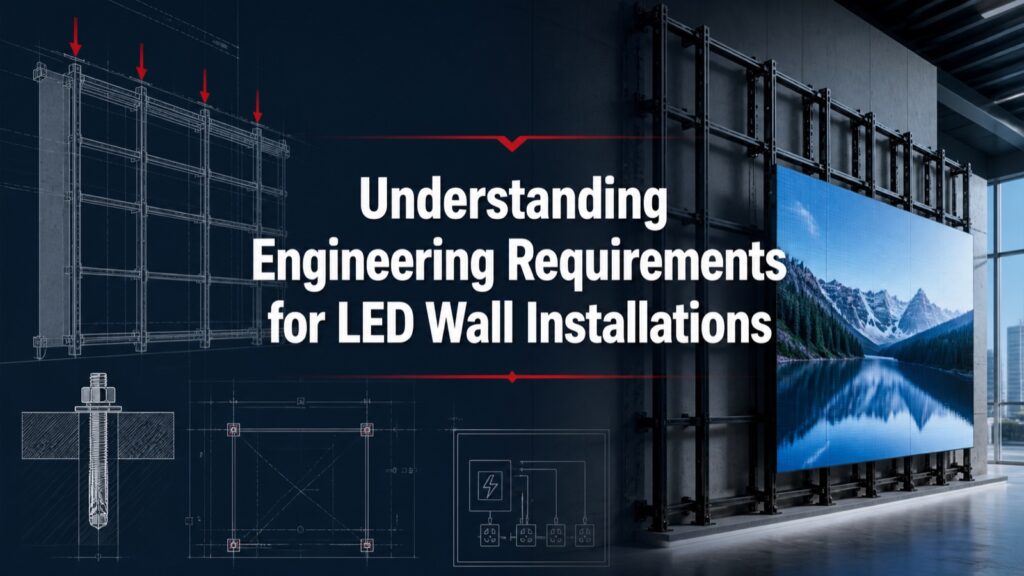
The module choice was only one part of the complete system. The supporting structure, electrical supply, data routes, display assembly, testing and configuration all had to work together before the screen could be commissioned.
Why the installation was paused instead of rushed
The project originally started in May. Once work began, the arena team determined that the available manpower and opening schedule would not allow both the LED installation and the ice rink to be completed on time.
Rather than force the installation into an unrealistic schedule, the project was paused. This allowed the arena to focus its resources on the work required for opening and gave the LED installation a better window for completion.
The Canadian LED team returned in August. A technician flew back to coordinate the remaining work, support the local arena partners and provide training.
That decision reflects an important lesson for any arena LED display installation: project sequencing matters. The screen must be coordinated with structural work, electrical work, data cabling, rink preparation, contractors and the venue’s operating schedule. A realistic plan protects both the installation quality and the opening date.
How the three-day LED video wall installation was completed
After the project resumed, the on-site work was completed in three focused stages.
Day 1: Mounting structure, electrical and data wiring
The first day was dedicated to completing the mounting structure and preparing the infrastructure behind the display. The electrical work and data wiring were also completed so the LED system could receive stable power and video signals. Electrical planning should be handled by qualified professionals and incorporated into the project schedule; the U.S. Occupational Safety and Health Administration’s electrical-safety resources explain why safe installation practices, grounding and appropriate equipment use matter.
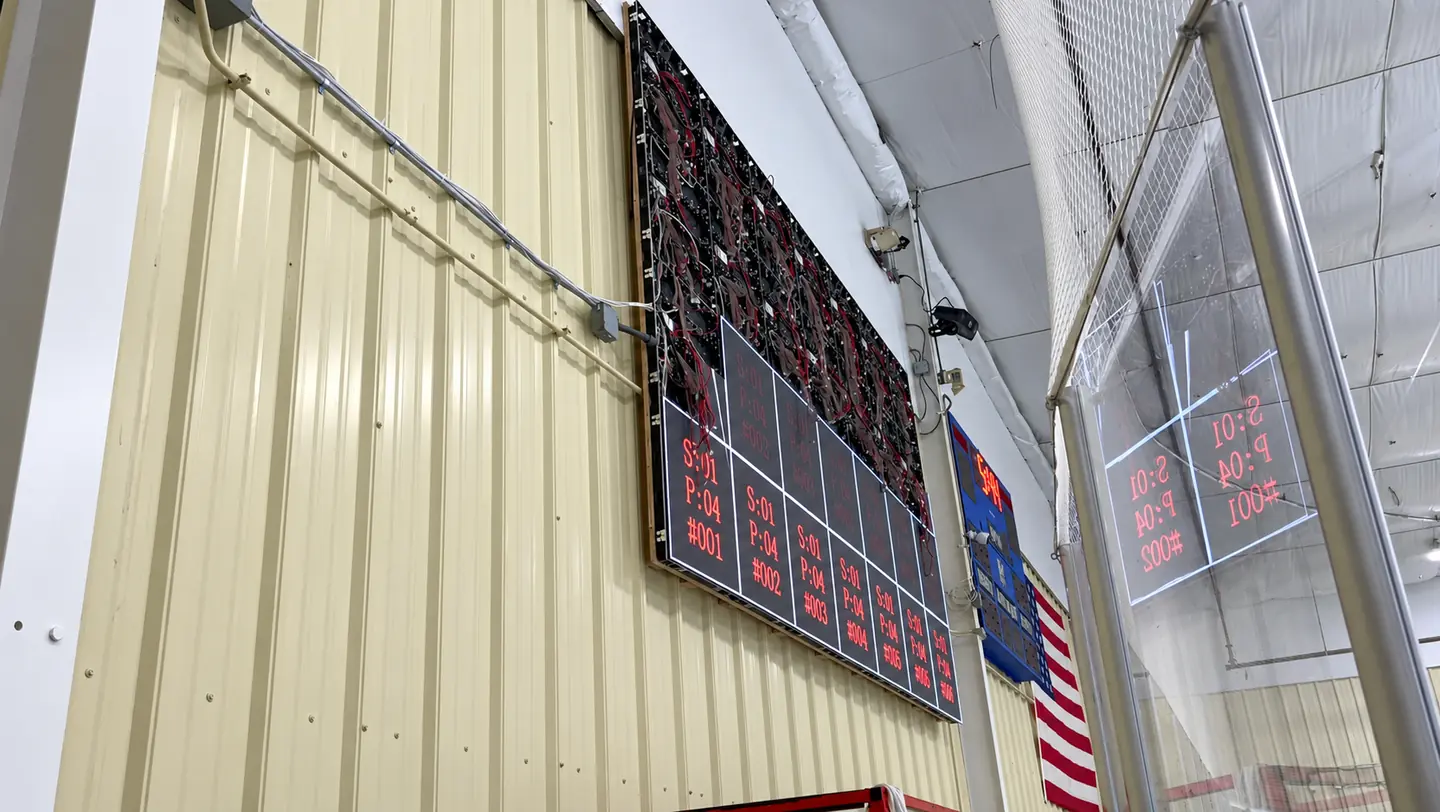
This preparation is essential. A finished LED wall depends on accurate alignment, appropriate structural support and properly planned cable routes—not only the visible display panels.
Days 2 and 3: Assembly, testing and configuration
Over the next two days, two technicians worked with electrical subcontractors to assemble the display, connect the system and bring the screen online. The team then tested and configured the wall to confirm that the modules, power, data and content system worked together correctly.
The arena’s local partners also received training so they could operate the display after handover. Training is a critical part of commissioning because the value of a multi-purpose screen depends on the venue team’s ability to switch sources and use it confidently.
You can see these steps in the installation-process video on YouTube.
One display for scores, live video and promotions
The completed hockey arena LED video wall gives Westchester Skating Academy a much broader set of options than its previous scoreboard.
The arena can use it to:
- Display scores and game information
- Show live game feeds
- Play promotional videos during events
- Present sponsor content and branded graphics
- Share venue announcements and event messaging
Because the content is digital, the screen can adapt to different games and events without being limited to one fixed scoreboard layout. That flexibility helps turn the display into both an operational tool and a communication platform.
What arena operators can learn from this project
This installation highlights several practical points for venues planning a scoreboard upgrade.
First, compare the complete value of the system—not only the equipment category. A large LED display may provide more usable screen area and content flexibility than a traditional scoreboard while remaining in a similar budget range.
Second, plan the installation around the venue’s full construction and operating schedule. Mounting, electrical, data and rink work often depend on different teams. Coordinating those responsibilities early reduces pressure during commissioning.
Third, choose the screen specification for the actual environment. Display size, viewing distance, pixel pitch, durability and content requirements should be considered together.
Finally, include testing and operator training in the project scope. The display is only ready when the system works reliably and the venue team knows how to use it.
Explore more completed installations in our LED screen project gallery.
Planning an LED display for your arena or venue?
Every sports facility has different viewing distances, structural conditions, content needs and operating requirements. Canadian LED can help you compare screen sizes, pixel pitches, mounting options and system configurations for your venue.
Contact Canadian LED to book a free consultation with an LED specialist and discuss your project, recommended configuration and pricing.
Frequently Asked Questions
What size was the LED video wall installed at Westchester Skating Academy?
The display is 15 feet wide by 8 feet high. It is approximately twice the size of the arena’s previous scoreboard.
What pixel pitch was used for the hockey arena LED display?
The screen uses a 2.5 mm pixel pitch, selected to support clear scoring graphics, live game feeds and promotional video on the indoor arena display.
What can an arena LED video wall display?
An arena LED wall can show scores, live game feeds, sponsor messages, promotional videos, event graphics and venue announcements. Its digital layout can be adapted for different games and events.
How long did the installation take after work resumed?
The on-site completion took three working days. Day one focused on the mounting structure, electrical work and data wiring. Over the next two days, the display was assembled, tested and configured.
Why was the installation paused?
The project was paused because the arena’s available manpower and opening schedule would not allow both the LED display and the ice rink to be completed on time. Work resumed in a more suitable installation window rather than being rushed.