Short answer: the on-site portion of a permanent indoor LED video wall installation commonly takes about two to five working days for a straightforward commercial project. A small, pre-engineered all-in-one wall may be completed in a day, while a large custom wall, structural reinforcement, new electrical service, difficult access or complex control integration can extend field work to one or two weeks. The complete project—from site survey and engineering through procurement, installation and handover—usually spans several weeks.
The important distinction is between installation time and the total project timeline. Businesses often focus on the day panels go on the wall, but a reliable result depends on decisions made earlier: dimensions, pixel pitch, viewing distance, structure, power, data pathways, content sources and service access. This guide explains what happens at each stage, what can slow the job down and how a Canadian facility team can keep its opening date realistic.
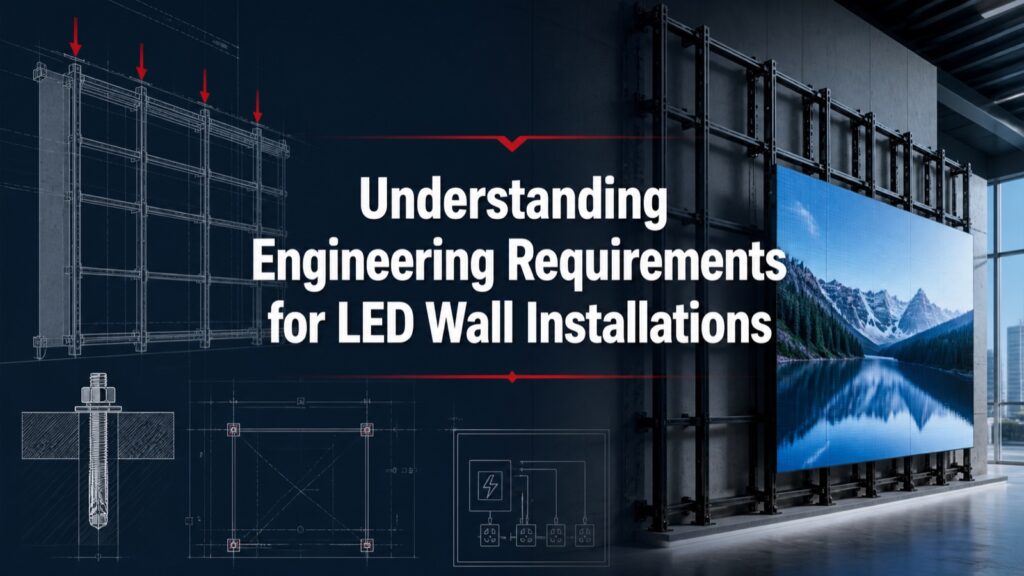
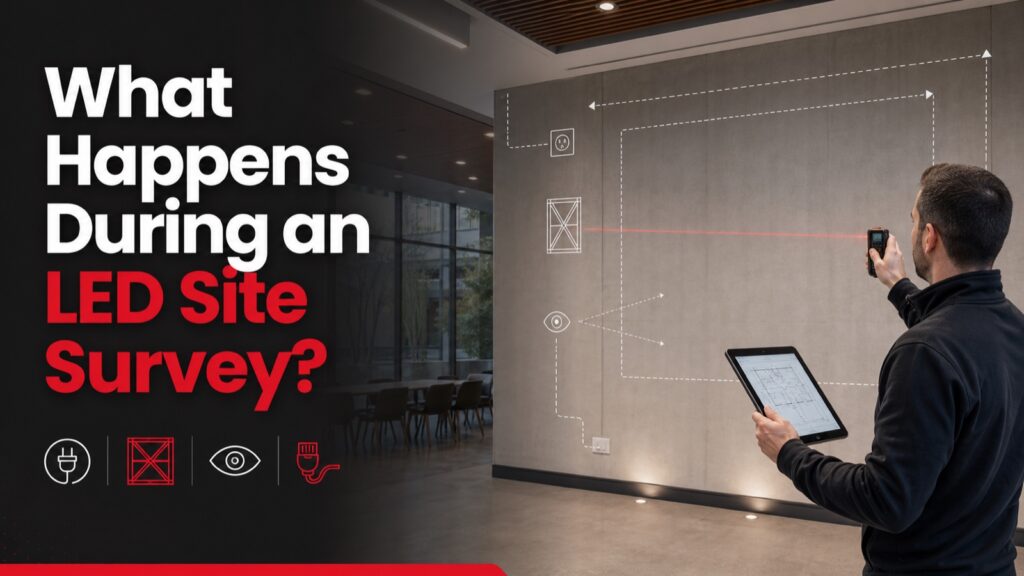
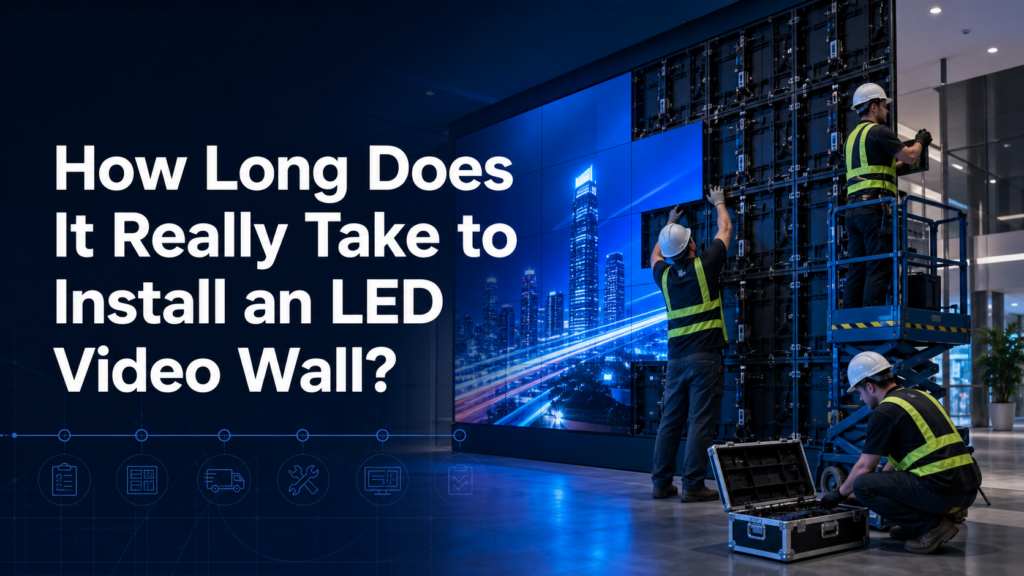
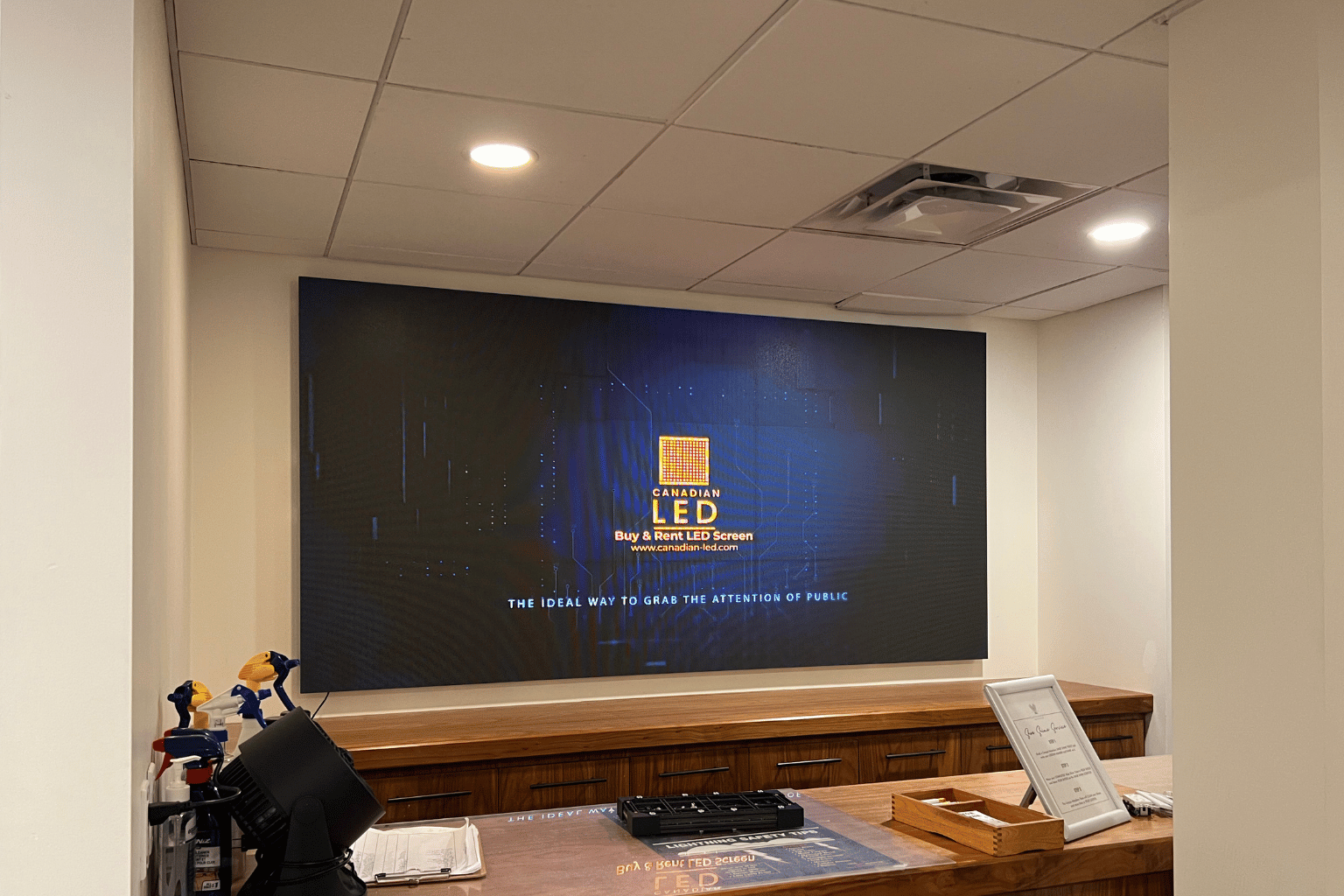
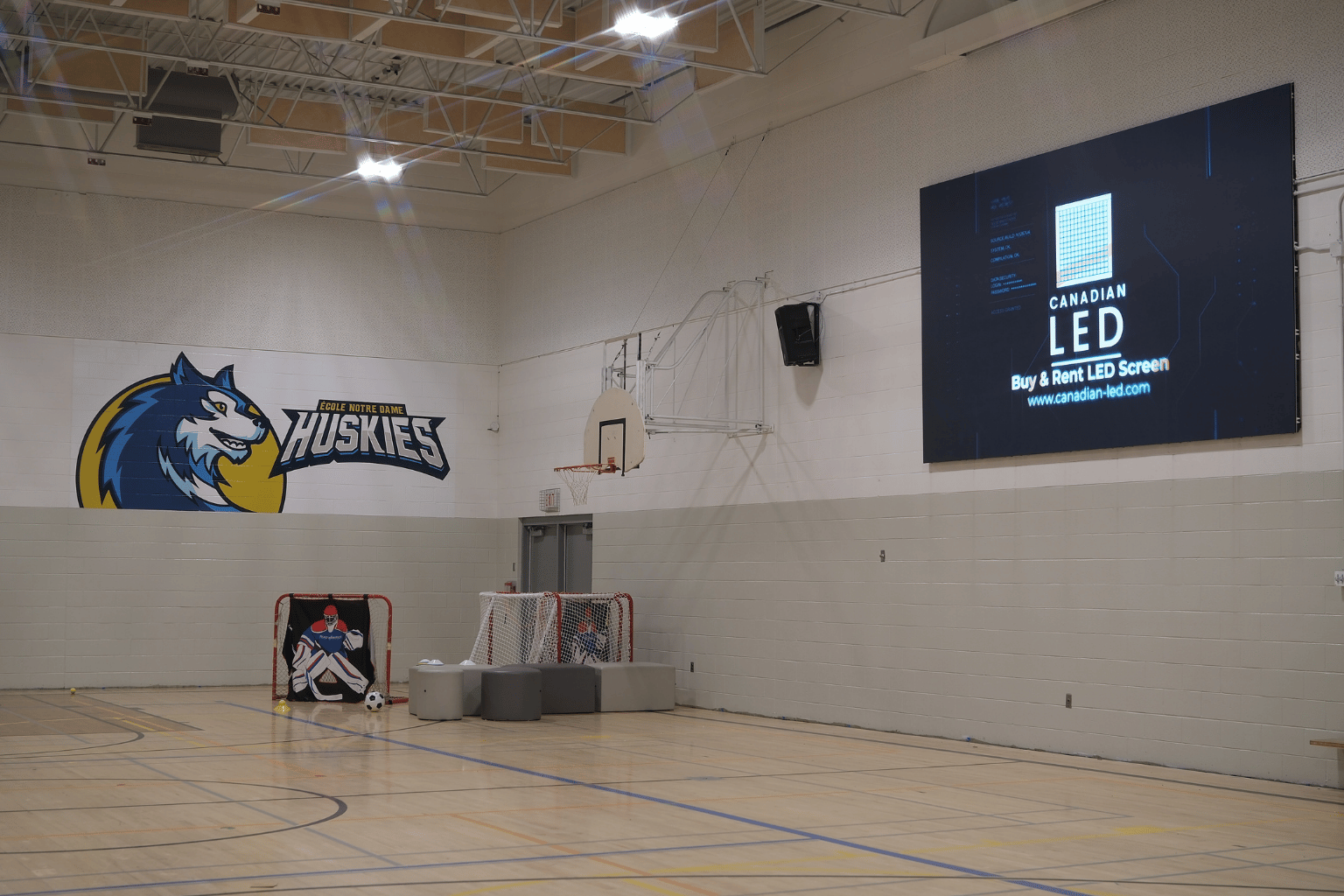
Editorial note: the featured image is a conceptual illustration of an installation process, not a photograph of a Canadian LED client project. The two project images within this article are authentic Canadian LED installations.
Typical LED video wall installation timelines
Every site is different, but these ranges are useful for early budgeting and scheduling:
- Small all-in-one indoor display: one day on site when the wall, power and signal source are ready.
- Standard permanent indoor LED wall: two to five working days on site, plus planning and procurement.
- Large or architecturally integrated wall: five to ten working days on site, sometimes longer when trades must work in sequence.
- Temporary event or rental wall: several hours to one day for many common sizes, depending on rigging, access and production requirements. If the requirement is temporary, compare the turnkey options for LED screen rental in Calgary.
These are planning ranges, not promises. A qualified integrator should confirm the schedule after a site survey and approved scope. Industry guidance from AVIXA emphasizes that display choice, mounting, ventilation, power, grounding and safety requirements all belong in the design—not as last-minute installation-day decisions.
The total project timeline, phase by phase
1. Discovery and site survey: a few days to two weeks
The first step is translating “we need a video wall” into a buildable scope. The team measures the available surface, identifies the primary viewing positions, checks ambient light, maps cable paths and records access constraints. It also confirms what the screen must show: presentations, live camera feeds, digital signage, broadcast content or several sources at once.
This phase can move quickly when stakeholders agree on the application and budget. It takes longer when architects, landlords, IT, marketing, facilities and electrical contractors all need to approve different parts. Early agreement prevents expensive redesign after equipment has been ordered.
2. Engineering and approvals: one to three weeks
A permanent LED wall is a system, not just a group of panels. Engineering covers the mounting surface or freestanding structure, screen dimensions, cabinet layout, processor, receiving cards, power distribution, grounding, heat management and future front- or rear-service access.
If new circuits, service changes or concealed wiring are required, the electrical work may need permits and inspection under the local authority having jurisdiction. Requirements vary by province and municipality. For example, the City of Vancouver’s electrical permit guidance explains when permitted work and new-load documentation apply. Your local licensed electrical contractor should confirm the rules for the actual building.
3. Procurement and pre-configuration: commonly three to eight weeks
Lead time depends on whether the required cabinets and modules are in stock, the pixel pitch, screen geometry and whether custom mounting or finishing is needed. During this period, the integrator should finalize drawings, label components, configure the processor, verify firmware and test modules before shipping them to site.
Pre-configuration is one of the best schedule protections. It moves troubleshooting into a controlled environment instead of a busy construction zone. Manufacturer-backed services such as LG’s DVLED installation program similarly highlight scope-of-work coordination, mount verification and field engineering as ways to make deployment more consistent.
4. Site preparation: one to five days, often in parallel
Before the LED crew arrives, other trades may need to reinforce the wall, install backing, provide dedicated circuits, route data, relocate sprinklers or fixtures, complete millwork and secure lift access. A finished surface that is flat and plumb matters: tiny mounting errors can compound across a large modular canvas.
Site preparation often occurs while the display is in transit. That saves calendar time, provided everyone is working from the same approved drawings. A pre-installation readiness call 48–72 hours before mobilization should confirm power, access, dust control, loading instructions, working hours and the availability of the client’s IT or AV representative.
5. Physical installation: one to ten working days
The field crew protects the work area, establishes reference lines, installs and levels the mount, places cabinets, connects power and data, then adds and aligns LED modules. The modular design is efficient, but precision—not raw speed—determines whether seams disappear and the wall remains serviceable.
A typical medium indoor wall may be mechanically assembled in one or two days, followed by another day for wiring, configuration and visual refinement. Large canvases, curved structures, high mounting positions, overnight work or restricted loading docks add labour and sequencing. Explore Canadian LED’s installation gallery to see how screen sizes and environments vary across real projects.
6. Calibration, testing and training: half a day to two days
Once the hardware is installed, technicians map the cabinets and modules, set resolution, balance brightness and colour, test every source and verify failover or control functions included in the scope. They should inspect the display from the intended viewing positions—not only from a laptop beside the wall.
Handover should include operator training, shutdown and startup procedures, content-resolution guidance, spare-module storage, service contacts and as-built documentation. Reserving time for real client content is essential. A technically perfect wall can still look poor if graphics use the wrong aspect ratio or fine text is unreadable at the audience’s distance.
What makes an LED wall installation take longer?
The most common schedule drivers are predictable:
- Structural work: insufficient backing, uneven surfaces or an unexpectedly weak wall.
- Electrical changes: new circuits, panel capacity issues, long cable routes, permits or inspections.
- Access: limited loading hours, elevators, security clearances, occupied spaces or lift restrictions.
- Custom geometry: curves, corners, unusual aspect ratios, recessed installations or decorative surrounds.
- System integration: multiple sources, control systems, audio, live production, streaming or network security review.
- Late design changes: changing size, pixel pitch, location or content workflow after drawings are approved.
- Construction dependencies: unfinished millwork, painting, ceiling work or other trades using the same area.
How to keep the project on schedule
- Name one decision owner. The integrator needs a client contact who can resolve scope and scheduling questions quickly.
- Approve the content plan early. Confirm aspect ratio, source devices and who will create and operate content before installation.
- Freeze dimensions before procurement. Small architectural changes can alter cabinet counts, mount design and processor requirements.
- Coordinate trades from one drawing set. Electrical, structural, IT, millwork and AV teams should reference the same revision.
- Protect commissioning time. Do not plan a public launch immediately after the last panel is placed; leave room for calibration, training and corrections.
If you are still selecting the display, review Canadian LED’s indoor LED screen options. The right cabinet format, pixel pitch and service method can materially simplify installation and long-term maintenance.
A practical schedule for a standard indoor project
For a straightforward permanent indoor LED wall, a realistic plan might look like this:
- Week 1: site survey, objectives and preliminary dimensions.
- Weeks 2–3: engineering, quote, approvals and deposit.
- Weeks 3–7: procurement, pre-configuration and site preparation in parallel.
- Week 8: two to five days of on-site installation, commissioning and training.
Stock availability and site readiness can shorten that schedule; custom production, permits and construction coordination can lengthen it. The useful number is therefore not an industry-average promise, but a project-specific critical path built after the site survey.
Plan the timeline with Canadian LED
Canadian LED supplies and installs permanent indoor and outdoor LED displays and supports temporary event requirements across Canada. Share your wall dimensions, photos, location, target opening date and content sources, and the team can identify the likely site work, equipment lead time and installation window. Request a consultation to turn your desired launch date into a practical LED video wall project plan.
Frequently asked questions
How many days does it take to install an LED video wall?
A straightforward permanent indoor LED video wall commonly takes about two to five working days on site. Small pre-engineered systems may take one day, while large or custom installations can take one to two weeks.
How long does the complete LED video wall project take?
From site survey through procurement, installation and handover, many commercial projects take roughly six to ten weeks. Stock availability, engineering, permits, construction and custom fabrication can shorten or extend that range.
Can an LED video wall be installed in one day?
Yes, some small all-in-one displays and temporary rental walls can be installed in one day when power, structure, access and signal sources are ready. A custom permanent wall normally needs more time for precise mounting, configuration and testing.
Does the building need to close during installation?
Not always. Many installations can be isolated to a controlled work zone or completed after hours. Noise, lifts, dust protection, public access and electrical shutdowns should be reviewed during the site survey.
What should be ready before the installers arrive?
The approved mounting surface, required power and data pathways, loading and lift access, finished surrounding construction, source equipment and a client representative for testing should all be ready before mobilization.
What happens after the panels are mounted?
Technicians configure cabinet mapping and resolution, calibrate brightness and colour, test sources and controls, inspect the picture, train operators and provide the agreed handover documentation and service information.