How Projectors Work
Projectors have been widely used in churches for decades. The system works by projecting light from a lamp or laser through a lens onto a projection screen. The image appears large because it is projected across the room onto that surface. In controlled lighting environments, projectors can perform reasonably well. When the sanctuary is dark and outside light is limited, the projected image can appear clear and readable. This is why many smaller churches still rely on projectors to display song lyrics or sermon notes. However, projectors have one major limitation: they depend heavily on darkness. When additional light enters the room — whether from windows, stage lighting, or ambient lighting — the projected image begins to lose brightness and contrast. This often becomes noticeable as churches introduce modern worship lighting. While the lighting enhances the atmosphere on stage, it can make projector images look washed out and difficult to read.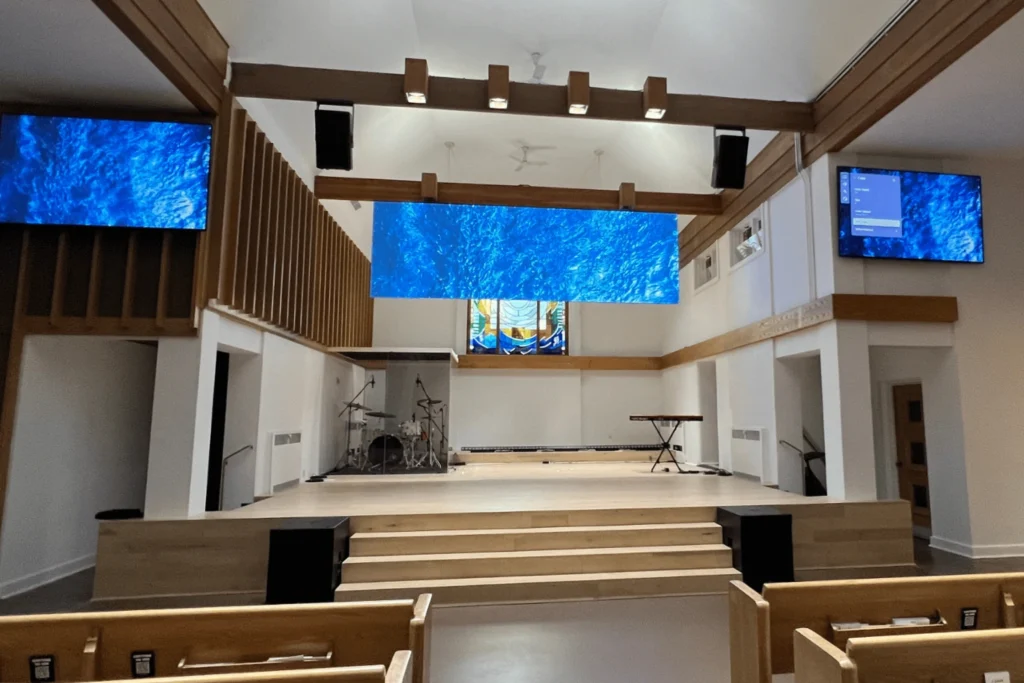
How LED Displays Work
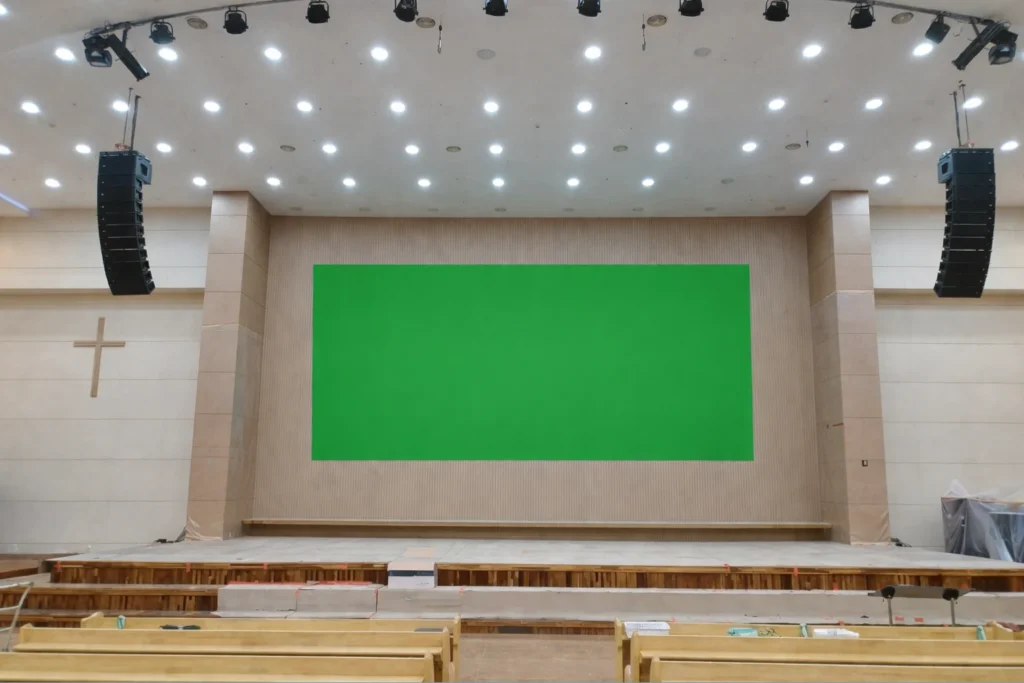
LED displays operate in a completely different way. Instead of projecting an image onto a screen, an LED display produces the image directly from the surface of the display itself. An LED display is made up of thousands of small light-emitting diodes. Each diode produces its own light and color, creating a bright and detailed image without relying on a projection surface. Because of this design, LED displays remain bright and clear even in environments with strong lighting. This is one reason led screens for churches have become increasingly popular. Modern worship spaces often include stage lighting, colored lighting effects, and brighter environments designed to create a more engaging service experience. LED displays maintain visibility even under those conditions.Pros and Cons of Projectors for Churches
Projectors remain a practical solution for some churches, especially those with limited budgets.Advantages
- Lower upfront cost
- Large image size for a relatively small investment
- Simple installation in many cases
- Works well in darker environments
Limitations
- Image becomes washed out in bright rooms
- Limited brightness compared to LED technology
- Lamps or laser modules eventually require replacement
- Narrower viewing angles
- Periodic calibration and maintenance
Advantages and Limitations of LED Displays
LED technology was originally used mainly for stadium screens and outdoor advertising. Over the past decade, however, it has become increasingly accessible for houses of worship.Advantages
- Extremely bright image that remains visible in any lighting
- Works well with modern worship lighting setups
- Wide viewing angles across the entire room
- No bulbs or lamps to replace
- Long lifespan
- Minimal maintenance
Limitations
- Higher initial investment
- Professional installation is typically recommended
Realistic Cost Comparison
Budget is often one of the most important factors when choosing a display system. While projectors typically have a lower initial cost, it’s important to consider long-term expenses as well.Typical Projector Pricing
- $5,000 – $10,000 for standard church projectors
- $15,000 – $25,000 for higher-brightness models
- $30,000+ for large sanctuary systems
Typical LED Display Pricing
The video wall cost for churches depends on the size of the display and the size of the room. Typical installations often fall within the following ranges:- $15,000 – $25,000 for smaller churches
- $25,000 – $40,000 for mid-sized sanctuaries
- $60,000 – $80,000 for large worship spaces
Brightness and Visibility in Worship Spaces
One of the biggest differences between projectors and LED displays becomes obvious when lighting conditions change. In a completely dark room, a projector may produce a reasonably clear image. But as soon as stage lighting increases, the projected image often begins to lose clarity and contrast. LED displays behave differently. Because each pixel produces its own light, the image remains bright even when lighting levels increase. This difference can be especially important in larger sanctuaries where some members of the congregation are seated far from the stage. Clear visuals make it easier for everyone to follow lyrics, scripture passages, and sermon slides.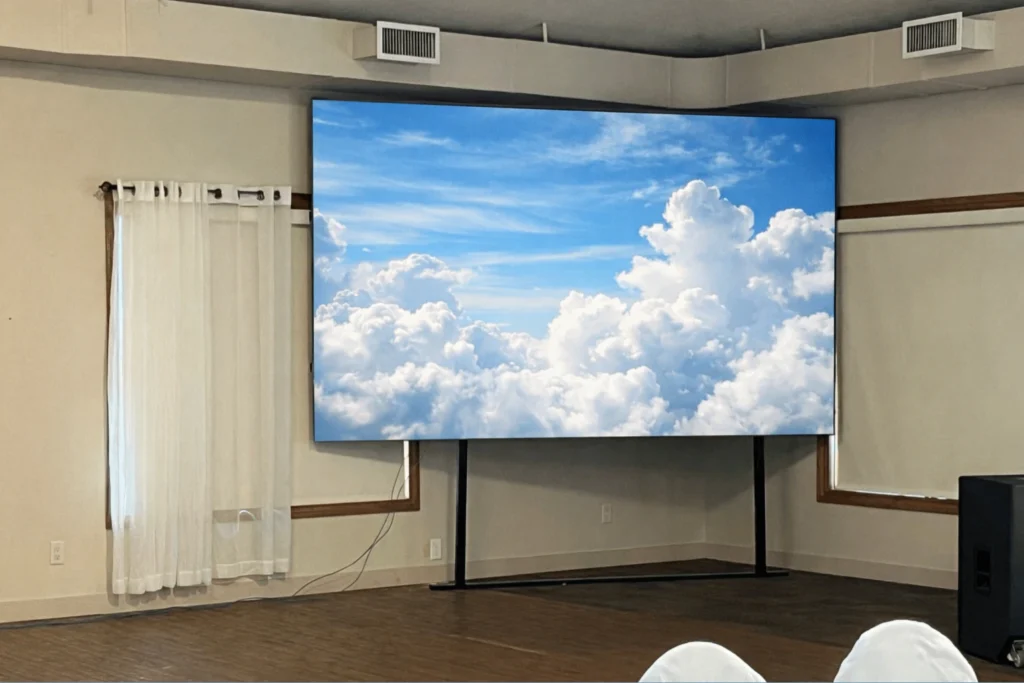
Lifespan and Long-Term Value
Another major difference between the two technologies is lifespan. Most projectors operate for approximately 10,000 to 20,000 hours before major components require replacement. LED displays, by comparison, can last up to 100,000 hours. For churches that hold weekly services, this means an LED display can operate for more than a decade. To match that lifespan, a church might replace several projectors over time — along with multiple lamps, filters, and projection screens. When these costs are considered, LED displays often become more cost-effective in the long run.When a Projector Still Makes Sense
Despite the advantages of LED displays, projectors can still be the right solution in certain situations. For example:- Very small churches with limited budgets
- Sanctuaries that remain dark during services
- Temporary or portable setups
- Churches with minimal visual requirements
When an LED Display Is the Better Choice
Many growing churches eventually transition to LED displays as their visual needs expand. LED displays are particularly beneficial when a church:- Uses modern worship lighting
- Has a larger congregation
- Uses live camera feeds during services
- Wants a long-term solution with minimal maintenance