Hi everyone,
My name is Artur, and I’m one of the lead technicians here at Canadian LED. Over the years, I’ve been part of many installations—concert venues, corporate stages, outdoor events, retail interiors—but there’s something particularly meaningful about working with faith communities. Churches don’t just need technology; they need clarity, connection, and systems that support their mission.
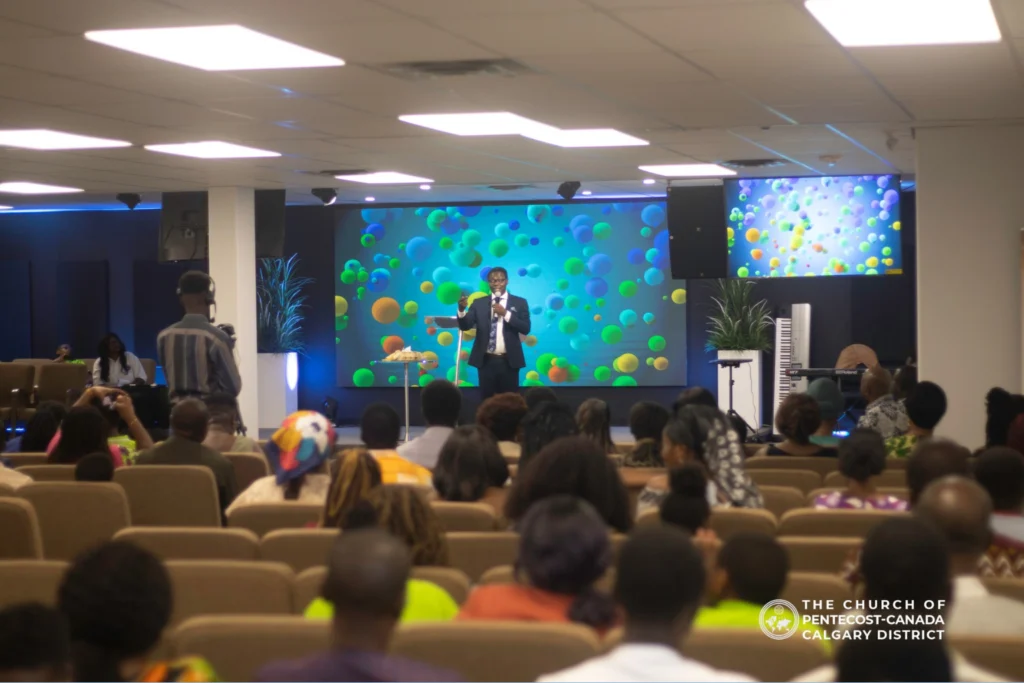
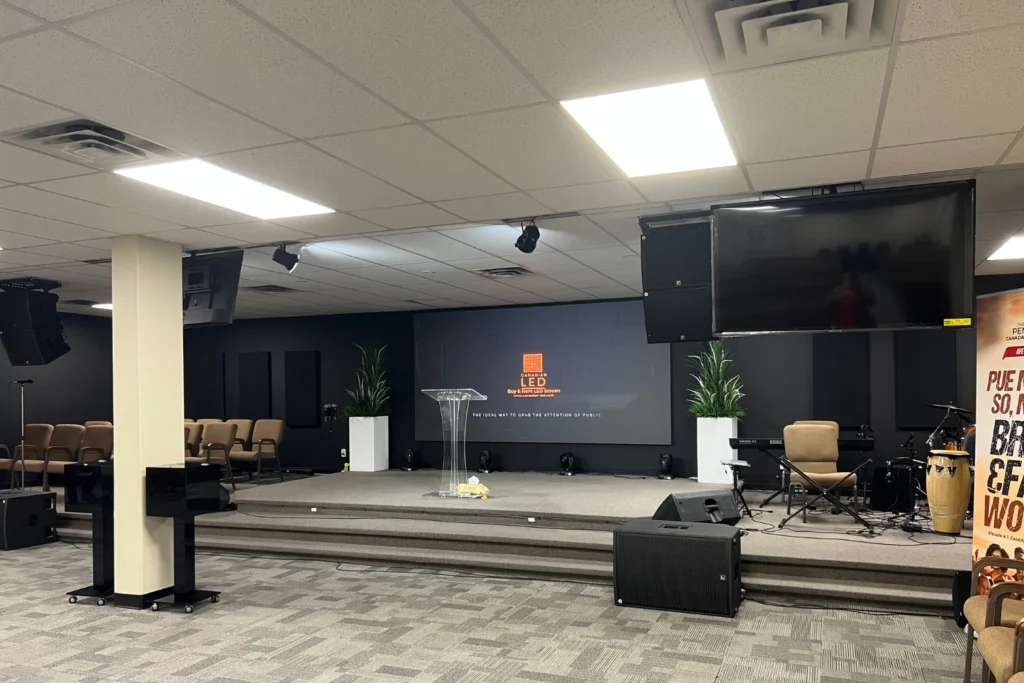
Recently, I had the opportunity to work on a full-scale LED display upgrade for The Church of Pentecost in Calgary, and I want to take you behind the scenes of the project. If you’d like to see the full video walkthrough, you can watch it here:
This wasn’t just an installation—it was a transformation that made a visible difference to the way the congregation experiences worship. And I’ll be honest: it’s one of the projects I’m most proud of.
Why the Church Needed an Upgrade
Before we arrived, the church relied on a traditional projector setup and a couple of small TVs around the sanctuary. This is something many churches still use, and while it can work for a while, projectors eventually reach their limit.
Here’s what the pastor and the technical team told me on day one:
- The projector image wasn’t bright enough once natural light filled the room.
- Text on the screen wasn’t always readable from the back seating areas.
- They wanted a clean, modern setup that matched the growth of their congregation.
- They wanted a long-term solution—not another short-term bandage fix.
Every time I hear this, I know exactly what’s going on. Projectors require bulb replacements, constant calibration, and a perfectly dark room to perform well. With churches, that’s rarely possible. Services are bright, dynamic, filled with movement. You need a visual system that keeps pace.
That’s why more churches across Canada are replacing projectors with LED displays. The clarity, brightness, and reliability are simply on another level—and that’s exactly what this church was looking for.
Planning the Upgrade: Making Sure It Fits the Space and the Worship Style
Whenever I work on a church installation, I always start by spending time in the space itself. I look at:
- How far the congregation sits from the stage.
- What angles the worship team needs to see the visuals.
- How the lighting interacts with the LED brightness.
- How the architecture can support mounting points.
- How easy it will be for volunteers to operate the new setup.
During the walkthrough, we realized that the church actually needed two LED screens, not one. They have:
- A main sanctuary on the ground floor
- A second worship hall on the upper floor
Both see regular use, and both needed visual upgrades.
From there, we mapped out the ideal LED display size. After a few calculations and measurements, we landed on the sweet spot:
- 12.6 ft × 6.3 ft main LED display
- 12.6 ft × 6.3 ft second-floor display
- Two vertical 2.1 ft × 6.3 ft side panels for the upstairs hall
The vertical side panels were something the church leadership didn’t know was possible—but once we presented the idea, they loved it. It creates a modern look and gives them more layout options for lyrics, Bible verses, or themed visuals.
The Installation: Six Days of Hard Work and Very Satisfying Progress
Whenever someone sees the final result, they think it looks simple—“just put up the panels and plug it in.” But trust me, building an LED display is both an art and a science.
Here’s what those six days actually looked like:
1. Preparing the space
We inspected every wall, studied the structural integrity, and confirmed the mounting areas.
2. Installing the steel frame
This is the backbone. If the frame isn’t perfect, the LED cabinets won’t align seamlessly. We used laser leveling to ensure precision.
3. Wiring and power management
LED displays require clean, stable power. We built a dedicated electrical route to ensure reliability.
4. Assembling the LED cabinets
Panel by panel, cabinet by cabinet—we assembled the displays until the entire structure came to life.
5. Calibration
We fine-tuned brightness, color temperature, and refresh rate.
6. Training the volunteers
The team learned how to switch layouts, adjust brightness, upload visuals, and run the software confidently.
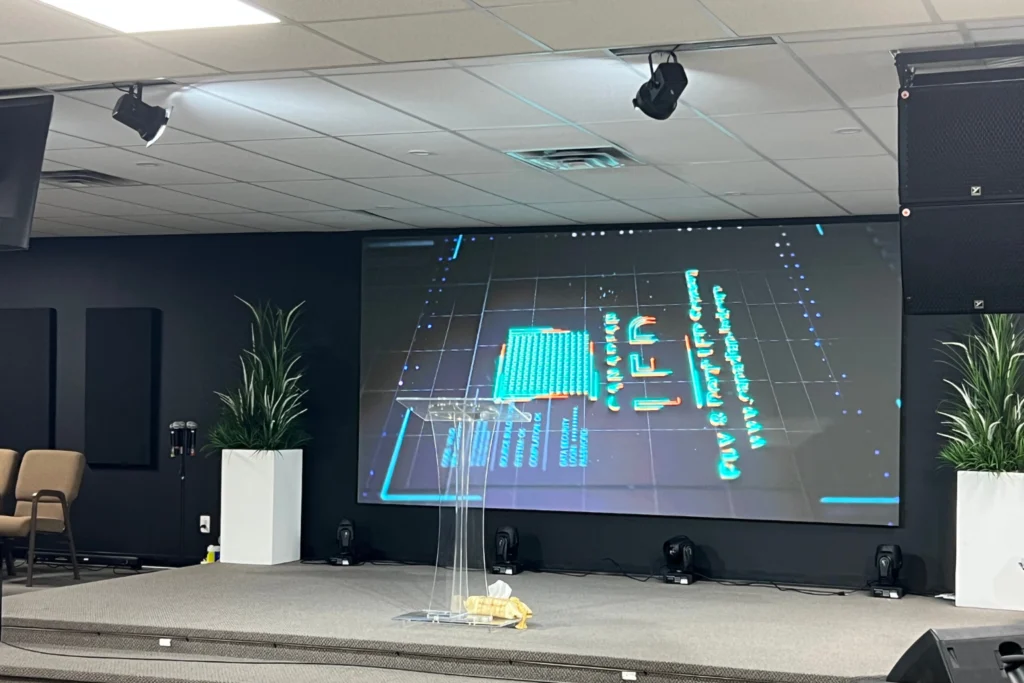
Seeing the Finished Result: Always the Best Moment
Once we powered everything on, the reaction was priceless.
“This… this changes everything.”
The difference between a projector and LED display is night and day.
You can see their reaction in the video here:
👉 https://youtu.be/jRtBoimRiWg?si=qvlovlT5_ziqqC_W
Before and After: A Transformation You Need to See
The footage highlights:
- How much brighter the LED displays are
- How modern the space looks
- How the vertical side panels add depth
- How daylight doesn’t affect visibility
Why LED Displays Make Sense for Churches
- They work perfectly in bright rooms
- They last many years with minimal maintenance
- They look modern and professional
- They support powerful worship visuals
- They’re cost-effective long-term
Some churches worry about the video wall cost, but long-term savings make it worthwhile.
Many also search for LED screens for churches because they’re optimized for visibility and durability.
If You’re Considering an Upgrade…
Don’t buy based on price alone. Buy based on expertise, support, and suitability for your space.
You can find cheaper LED walls for sale, but installing LED in a church requires engineering, structural work, calibration, power planning, and training.
Final Thoughts From a Technician Who Loves This Work
Every installation is different. Every church has its own story. And every time I walk away from a project like this, I feel proud—not just of the technical work, but of what it makes possible.
Here’s the full video again:
👉 https://youtu.be/jRtBoimRiWg?si=qvlovlT5_ziqqC_W
Artur – LED Technician