Hi, my name is Artur. I’ve been working as an LED display technician for many years, and a big part of my job has been installing LED systems in churches of all sizes — from small community congregations to large, multi-campus sanctuaries.
Every church is different. Some meet in historic buildings with limited electrical capacity. Others are modern spaces designed for live streaming and large-scale worship production.
But no matter the size or style, churches usually come to me with the same question:
“How do we choose the right LED display without overpaying or making mistakes we’ll regret later?”
This article is my honest, practical answer to that question — based on real installations, real challenges, and real long-term results.
Why Churches Choose LED Displays
In most cases, churches don’t start by wanting something “high-tech.” They start because something isn’t working anymore.
I’ve seen the same issues come up again and again:
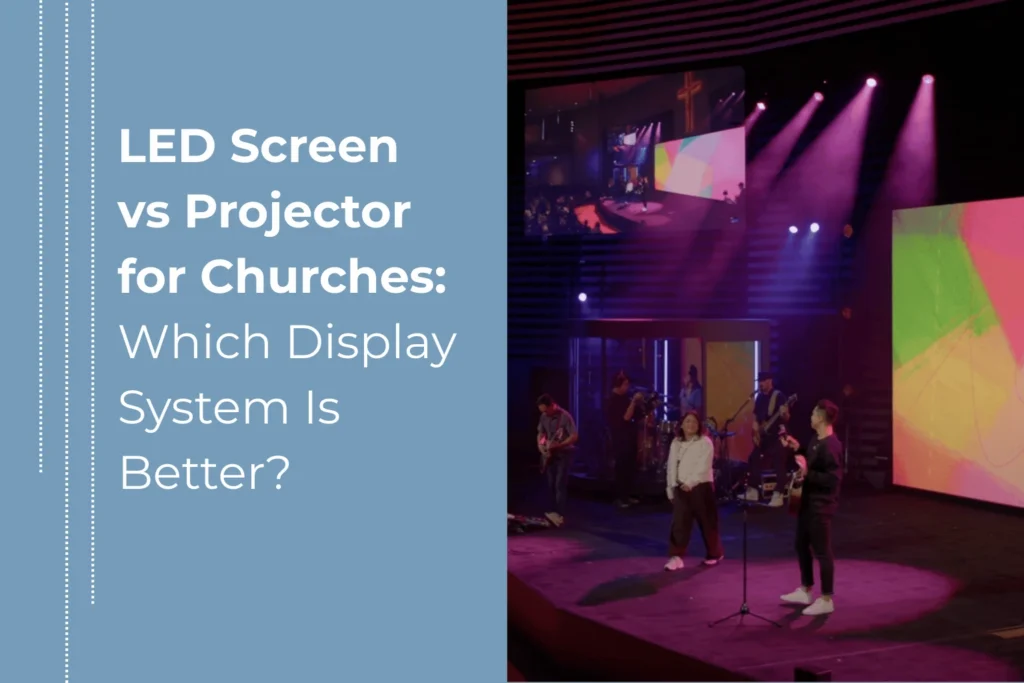
- Projectors that look washed out as soon as stage lights turn on
- Expensive bulbs burning out at the worst possible time
- Shadows crossing the image every time someone walks in front of the beam
- Poor image quality for livestreams and recordings
Eventually, the conversation shifts from “How do we fix the projector?” to “Is there a better solution?”
That’s usually when LED displays enter the picture.
First Impressions Matter
One thing I’ve learned over the years is that visuals shape how people feel when they walk into a sanctuary — even if they can’t explain why.
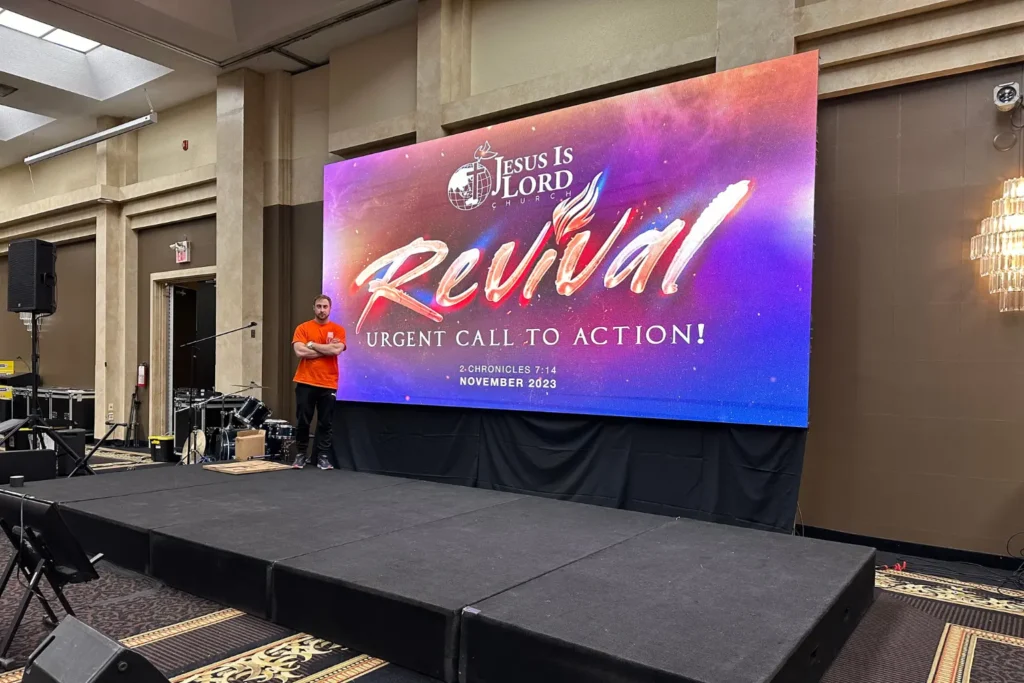
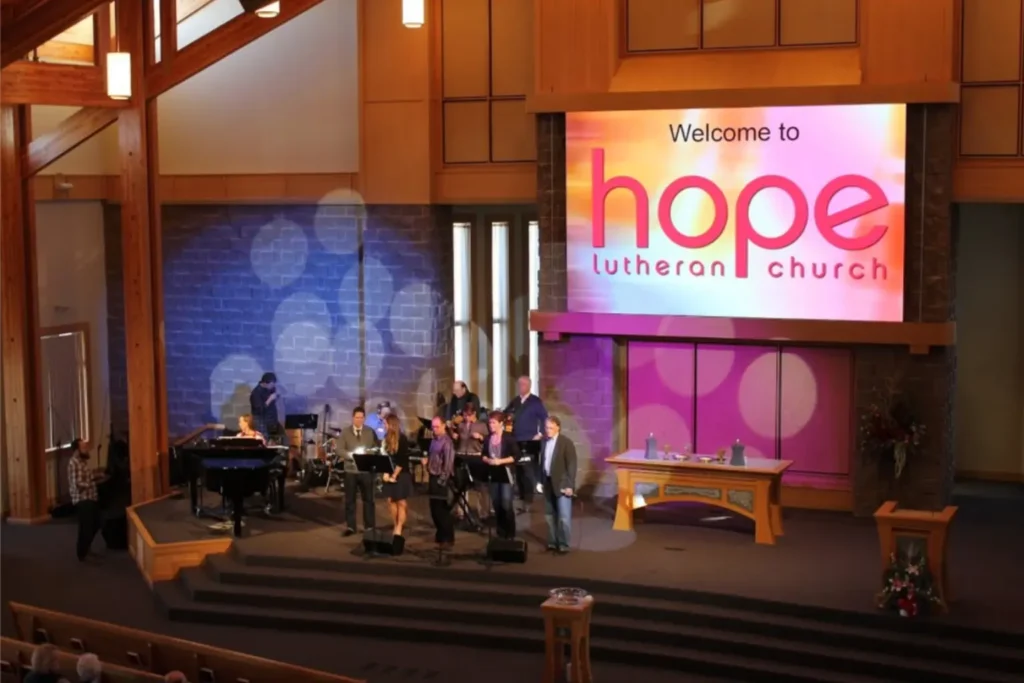
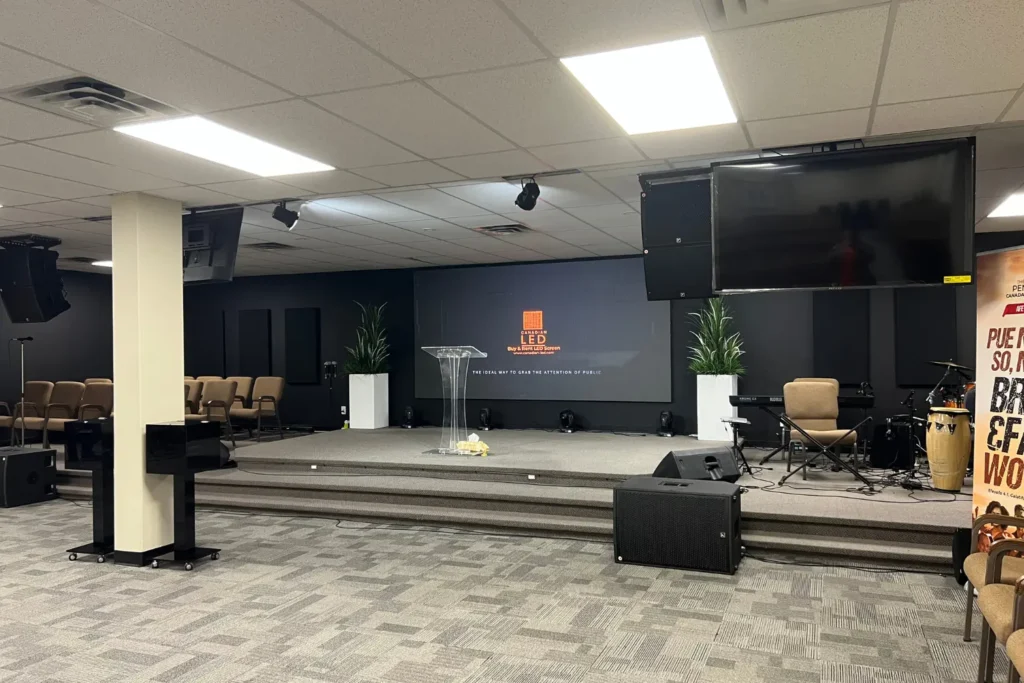
A properly installed LED display instantly gives the space a clean, modern, and intentional look. Worship lyrics are clear. Sermon visuals are easy to read. Livestream viewers see a sharp, professional image instead of a dim projection.
It’s not about being flashy. It’s about removing distractions and helping people focus on the message.
LED Display Lifespan
One of the most important factors churches often underestimate is lifespan.
Most quality LED modules are rated for up to 100,000 hours of use. In real terms, that’s roughly 10–15 years, even with frequent weekly services and events.
By comparison, most projectors last between 15,000 and 25,000 hours, which means replacing them several times over the same period.
Yes, the upfront investment for an LED display is higher. But when churches look at total ownership — replacement cycles, maintenance, downtime — the long-term value becomes clear.
Choosing the Right Screen Size
Screen size is one of the first things people ask about, and one of the easiest places to make a mistake.
The LED display width should be about 60% of the stage width.
- Small churches (150–200 people): around 10 × 6 ft
- Medium churches (200–500 people): around 15 × 8 ft
- Large churches (500+ people): 20 × 10 ft or multi-screen layouts
Aspect Ratio (16:9)
Most church content — sermon slides, worship lyrics, videos — is created in 16:9. Keeping the LED layout close to this ratio prevents black bars, cropped visuals, and distortion.
Pixel Pitch and Viewing Distance
Pixel pitch = distance between pixels. Smaller number = sharper image.
- 2.5mm works beautifully for most sanctuaries with closer seating
- 4.0mm is better for very large rooms
For most churches, 2.5mm is the sweet spot — clear, cost‑effective, and future‑proof.
Refresh Rate for Livestreaming
A refresh rate of 3840Hz or higher prevents flicker on camera and keeps livestreams looking professional.
Brightness
For church environments, 500–700 nits is typically ideal — bright enough to stay clear, but comfortable to watch.
Power and Electrical Planning
A 100 sq ft LED display with 2.5mm pitch typically requires around 30 amps, which is why proper site assessment is essential.
Installation Options
Wall‑Mounted
- Cleanest look
- Minimal space usage
- Best for permanent sanctuaries
Ground‑Supported
- Portable and flexible
- Takes stage depth
Rigged / Hanging
- Ideal for mobile churches
- Saves floor space
Durability
GOB‑coated modules provide extra protection against bumps, cleaning equipment, and stage activity.
Long‑Term Planning
Expanding an LED display years later can cause color and brightness mismatches, so choosing the right size from the start is important.
Controllers and Daily Use
Most churches operate LED displays through standard HDMI connections with software like ProPresenter or EasyWorship.
Servicing and Maintenance
- Individual modules can be replaced
- No need to remove the full screen
- Minimal downtime
Safety and Certification
UL or ETL certification ensures compliance with North American safety standards.
Budget and Cost Expectations
Typical full‑installation ranges:
- 10 × 6 ft: $15,000–$25,000
- 15 × 8 ft: $25,000–$40,000
- 20 × 10 ft: $50,000–$70,000
Choosing the Right Partner
Working with an experienced supplier ensures certified products, local support, volunteer training, and proven church experience.
At Canadian LED, this approach has helped many congregations transition confidently to LED displays, including projects involving LED displays for churches across Canada.
Final Thoughts
Choosing the right LED display isn’t about chasing specs — it’s about clarity, reliability, and long‑term value.
Churches that plan carefully enjoy systems that serve them well for many years — visually, technically, and financially.
If you’re in the planning phase and want honest guidance, that’s always the best place to start.